Frenchie Cherry Eye Surgery: $1K–$2.5K Per Eye — What to Know
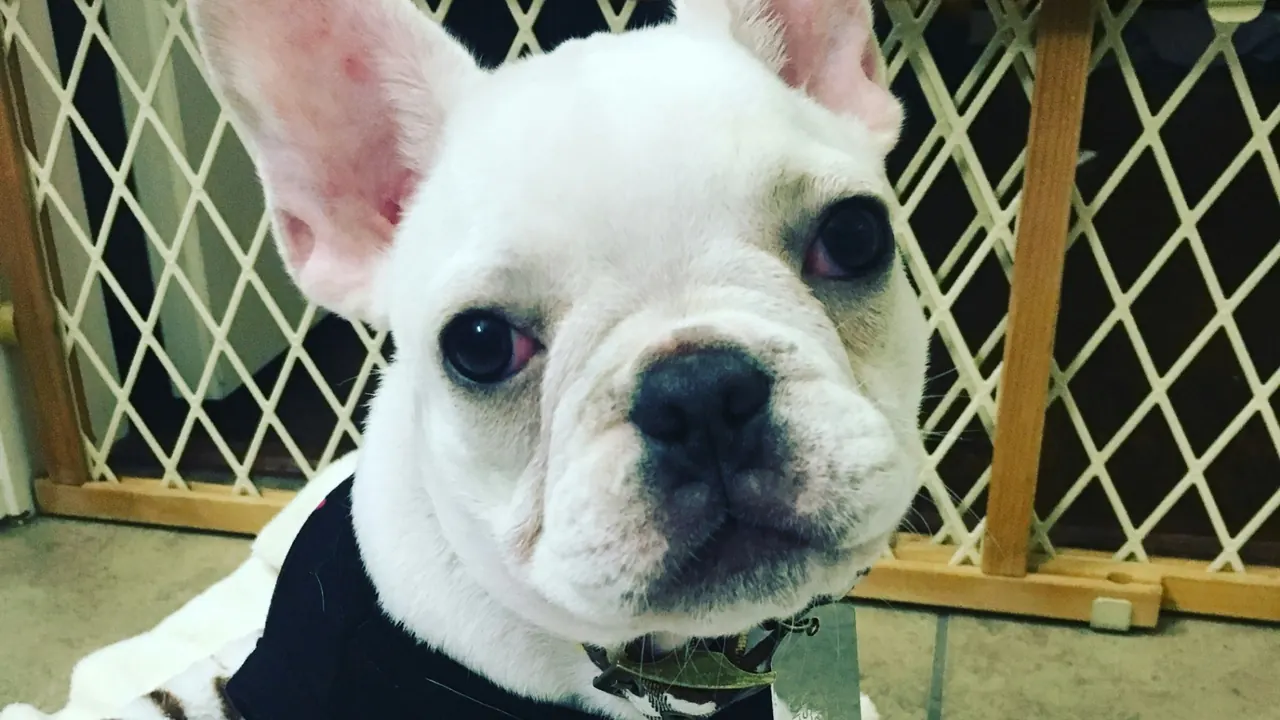
Cherry eye is common in French Bulldogs. What causes it, what repair costs per eye, how the techniques differ, recovery time, and how insurers usually treat it.
Quick Answer
Cherry eye in a French Bulldog is a prolapsed third eyelid gland. Surgical repositioning generally costs $1,000–$2,500 per eye, and both eyes are often affected over time. Repositioning preserves tear production; removal tends to cause dry eye. Comprehensive plans usually cover it as hereditary if it appears after enrollment.
**Short answer:** cherry eye is a prolapsed third eyelid gland, and in French Bulldogs it generally needs surgical repositioning rather than removal. Repair typically costs $1,000–$2,500 per eye, recovery runs about two to three weeks in a cone, and comprehensive policies usually pay for it as a hereditary condition — provided the eye had not already popped before the policy started.
It is an alarming thing to walk into: a red, glossy lump filling the inner corner of an eye that looked normal yesterday. The condition is common in this breed, well understood, and fixable. What follows is what the gland actually does, why these dogs are predisposed, how the surgical options differ, what recovery involves, and where policies tend to draw their lines.
## What is cherry eye in a French Bulldog?
Dogs have a third eyelid, and tucked behind it sits a tear gland responsible for a large share of the eye's tear film — commonly cited at around a third. A small band of connective tissue holds that gland in place. When the band stretches or fails, the gland slips forward and sits exposed at the inner corner as a pink or red mass. Nothing has burst and nothing is bleeding; a normally hidden structure has simply changed position. The exposure is the problem, because tissue meant to stay moist and protected now dries in the air and rubs against the eyelid with every blink.
## Why are French Bulldogs prone to cherry eye?
It tracks with the breed's structure. Brachycephalic skulls give shallow orbits and prominent, widely exposed eyes, and the soft-tissue attachments around the third eyelid in these dogs tend to be less robust than in longer-muzzled breeds. That combination is thought to be inherited, which is why the condition clusters in Frenchies, English Bulldogs, Boston Terriers and Shih Tzus, and why it sits alongside BOAS and IVDD on the breed's health cost profile. It is not caused by anything an owner did or failed to do, and there is no established way to prevent it. It also means insurers file it under hereditary conditions — a classification that decides coverage more than the price of the surgery does.
## Should cherry eye be treated, or can it be left alone?
Leaving it is generally discouraged, though the reasoning is worth understanding rather than taking on faith. An exposed gland dries, inflames and can become infected, and prolonged prolapse is associated with reduced tear output from that gland afterwards. The end state owners are trying to avoid is keratoconjunctivitis sicca — chronic dry eye — which is managed with lifelong medication rather than cured, and which can scar the cornea. Some vets will trial anti-inflammatory drops first, particularly on a very recent prolapse in a young puppy, and a gland occasionally repositions itself for a while. Most cases still come back. Timing matters more than urgency here: this is not a same-night emergency in the way heat stroke is, but weeks of waiting tends to make the repair harder and the outcome less clean.
## How much does cherry eye surgery cost per eye?
Repositioning generally lands between $1,000 and $2,500 per eye at a general practice, covering the pre-op exam, anesthesia, the procedure itself, take-home drops and the first recheck. A board-certified veterinary ophthalmologist usually sits at or above the top of that band, and metropolitan pricing pushes it further — the same geographic spread that shows up in insurance costs by state. Bilateral cases, which are common in this breed over a dog's life, commonly reach $3,000–$5,000 in total once both repairs, medications and rechecks are counted. Set against a monthly premium in the $50–$120 range, a single bilateral year is the kind of bill that changes how owners think about coverage.
## Pocket technique vs. tacking vs. gland removal
Two repositioning methods dominate. The Morgan pocket technique buries the gland inside a pocket created in the conjunctiva and sutures it closed, which tends to hold well on larger prolapses. Tacking — orbital rim or scleral anchoring — passes a suture to hold the gland back in position, and is a shorter procedure. Reported recurrence for either generally falls in the 5–20% range, varying with technique, gland size and surgeon experience, and some surgeons combine both on stubborn cases. Gland excision is the third option and is now reserved for unusual situations, such as a gland with a mass or one that has failed repeated repairs, because removing a major tear producer raises the risk of the dry eye the surgery was meant to prevent. If a quote is notably cheaper than the numbers above, it is worth asking which of the three is being proposed.
## What does recovery from cherry eye surgery look like?
Roughly two to three weeks. The cone stays on for most of it, because a single determined paw at a fresh suture line can undo the repair. Expect an antibiotic drop and an anti-inflammatory drop on a schedule of several doses a day, plus one or two rechecks. Some swelling and a droopy or slightly cloudy look in the first days is normal and settles; the signs worth calling about are the gland reappearing, pronounced squinting, yellow or green discharge, or a dog that stops eating. Walks stay short and calm, and rough play waits. Follow-up medication and rechecks commonly add $200–$500, and they generally belong on the same claim as the surgery rather than a separate one — worth getting right when you file the claim.
## Does pet insurance cover cherry eye surgery?
Most comprehensive US policies do, treating it as a hereditary or congenital condition, and the coverage detail sits in our dedicated cherry eye insurance guide. Three conditions generally have to hold. The prolapse has to appear after the policy starts and after the illness waiting period, typically 14 days — see waiting periods explained. Hereditary conditions have to be included, which most carriers do as standard while a minority still exclude them, one of the wording checks in what a policy covers and in how to choose a plan. And nothing eye-related can already sit in the records, since a vet's note about a prolapse — even an undiagnosed one — is enough to make it pre-existing, with bilateral clauses often carrying the exclusion to the healthy eye. Because most cases arrive before age two, the practical answer is enrolling as a puppy, which is also the cheapest age to start.
There is a pattern to how this actually plays out, and it is quieter than the panic suggests. The lump appears on a weekend. Someone photographs it, sends it to a group chat, and gets four confident and contradictory answers. By Monday it looks a little smaller, which feels like good news and usually isn't. The appointment gets made for the following week, then moved, and somewhere in that stretch the question shifts from what is wrong with the eye to whether the policy was bought before or after the photo was taken. That date, more than the surgeon or the technique, tends to decide what the year costs.
Cherry eye is one of the more manageable things this breed produces — a defined procedure, a known price band, and a recovery measured in weeks. What determines the financial side is coverage that was already in place, since a diagnosis first and a policy second generally leaves that eye outside the plan for good, as insuring after a diagnosis sets out. If you are comparing carriers, the 2026 plan comparison and what the breed costs without insurance are the two worth reading side by side.
People Also Ask
How much does cherry eye surgery cost for a dog?
For a French Bulldog, repositioning surgery generally runs $1,000–$2,500 per eye, including anesthesia, the procedure and the first recheck. When both eyes prolapse over time, owners commonly report $3,000–$5,000 in total with medications and follow-up.
Can cherry eye heal on its own in dogs?
It rarely resolves permanently. A gland can slip back in temporarily, and anti-inflammatory drops may reduce swelling, but the underlying ligament is still weak, so most cases return until the gland is surgically repositioned.
What is the difference between cherry eye tacking and the pocket technique?
Tacking anchors the gland to nearby tissue with a suture; the pocket (Morgan pocket) technique buries it in a surgically created fold of conjunctiva. Both aim to preserve tear production, and surgeons pick between them based on gland size and prior repairs.
Is cherry eye painful for a French Bulldog?
The prolapse itself is more irritating than acutely painful at first, but exposed tissue dries out and can become inflamed or infected, which does hurt. Squinting, pawing at the eye or discharge suggests it has moved past mild irritation.
At what age do French Bulldogs get cherry eye?
Most cases show up in the first two years, often between four months and one year. Later onset happens, and a dog that has had one eye repaired has a meaningful chance of the other prolapsing afterwards.
Does insurance cover cherry eye in the second eye?
Usually yes when neither eye was affected before enrollment. If the first eye prolapsed before coverage started, many carriers apply a bilateral clause and treat the second eye as part of the same pre-existing condition.